My decision to take my therapy sessions outdoors wasn’t instant. I spent hundreds of hours sitting in counsellor training with the preconceived idea of seeing future clients in premises with four walls and two chairs. A contained space. Textbook stuff. The way I was taught.
However, as I navigated the transition from the role of ‘Trainee’ to Trained’, I had time to think about what I really wanted my private practice to look and feel like. I was working part-time in a recovery centre for those struggling with addiction and other mental health issues, a place where fields and leafy lanes and wide skies provided refuge for burned-out souls, many of them from the fast-paced and chaotic city. I saw how the power of nature calmed their nervous system and gave them space to think and ‘be’. The outdoors had also been a fundamental part of my own recovery in the form of sea swimming and little adventures such as camping and hiking.
Seeing an opportunity
I actually felt reasonably confident about working with clients outdoors, more so than working with them indoors. This was because, five years ago, when moving to the Kent coast, I established an outdoor photography business, leading my clients on little adventures by the seaside. I therefore didn’t just have the experience in working outdoors. I also had an existing platform on which to build on. The Outdoor Studio very much overlapped with many of the principles and values which my counselling stood for. Wellbeing. Empowerment. Identity. Purpose. Community. Getting out of our comfort zone. I saw an opportunity for the brand to evolve and encompass my new skillset. I reminded myself that I’d built an outdoor photography brand based on the notion that people were more relaxed when they were sitting amongst bluebells or walking barefoot on a beach, so why couldn’t I apply this to my therapy?
There were, in fact, a few reasons why I felt I couldn’t. I worried whether I’d be able to properly maintain a client’s confidentiality whilst walking along local footpaths. I foresaw problems such as sessions being rained off, not being able to fully connect with my client because I could not consistently look into their eyes, and nuisance dogs joining in on our private conversations…but then I thought of Jason Fox.
Former Special Boat Service soldier and television personality Jason Fox (aka Foxy) of ‘SAS Who Dares Wins’ went to therapy after being diagnosed with PTSD and chronic burnout in 2012. Following his medical discharge from the military, he told people it was due to tinnitus, such was the stigma of suffering from mental health problems. When he finally sought help and began to heal, it was through Walk & Talk sessions with a female therapist. When I read his autobiography years ago, this inspired me. He had found a ‘type’ of emotional exploration which he felt safe with. Walking alongside his therapist in the woods was what was right for him. I therefore knew that I would find my ‘Foxys’. I would find the people who were right for me. The ones who wanted to walk.
This real-life case study helped me figure out that, by offering Walk & Talk sessions, I was expanding access to therapy. For clients who are intimidated by the traditional notion of the counselling room, the constant movement and lack of eye contact in Walk & Talk would be a more comfortable context for easing into the therapeutic conversation. There were many other benefits too. Walking is freeing, facilitating the release of stress and anxiety. It also increases mind-body awareness; actively moving while discussing feelings can help to unpack the bodily sensations of repressed emotions. People with low self-esteem may also feel better about themselves whilst being active, thus opening up to their therapist.

Not just about the client
I admit, it wasn’t just about the client, It was also about me. I believed that the outdoors would empower me to do my best work. I would be more comfortable and alert, making me a more effective practitioner. I would also be able to incorporate my creativity, using nature as a tangible metaphor for the complex, often invisible internal struggles addressed in therapy. I foresaw winter and dormancy being a pertinent theme for some. The Certainty of Spring. Storms. Fog. Rain. The growth rings in trees. Deep roots versus shallow roots. Erosion and the reshaping of the land. By observing the natural world, individuals can externalise their pain, contextualise their growth, and find language for experiences that feel impossible to articulate. The sea, an environment where I take many of my clients, has long been a poignant and helpful analogy for accepting life’s changing tides. It reminds us that highs and lows are normal. It symbolises going deep, really delving into what lies beneath our surface. It is also a reflection for how I like to work. It flows rather than forces. Reflects the client back at themselves, so they can see their potential. Yes, there is so much to work with in nature. It is such an asset in therapy.
I did a big walk once. A friend and I followed the Thames Path, a 180-mile trail from source to sea. We were both trying to recharge after having our third baby. We were fragile and uncertain about our purpose and identity but as we walked and talked, we processed our thoughts and feelings, hopes and fears. The journey was stimulating and empowering. The river became synonymous with our growth. We’d started as mere trickles. Small streams, yet to be channelled. We developed depth and real, purposeful direction. That year she published her first anthology of poems and dedicated it to me. I launched The Outdoor Studio, the first expression of my creativity which truly came from the heart. Walking had made us more resilient, self-aware, and confident. I keep this journey in mind when welcoming my clients, looking forward to seeing the river which they would slowly and steadily become.
Of course, Walk & Talk is not for everyone. My good (and very frank) friend Natalie, a nurse at the recovery centre I work at, said the following when I told her about my big idea – “I cannot think of anything worse than going for a walk with my therapist.” However, Natalie’s dismissal didn’t dampen my passion. I figured that she wasn’t my target client. I would pursue less ‘Natalies’ and focus on finding more ‘Foxys’.
Are you one of them?
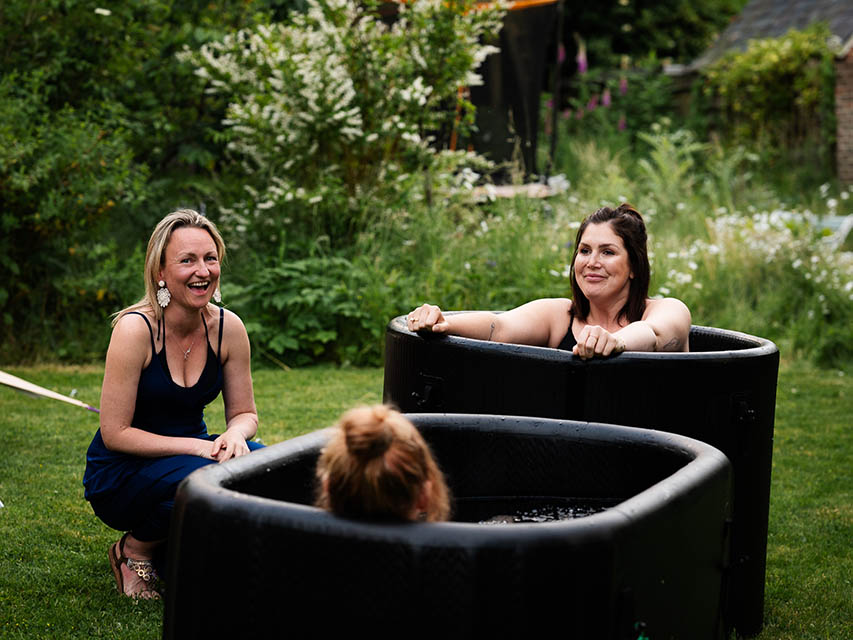
Hello, I’m Charlotte. I am a qualified therapist with a focus on working outdoors. I help people to be seen and heard through Walk & Talk sessions and other therapeutic experiences such as adventurous portrait photography and ‘wild’ workshops. I know from my own experience that when we are seen and heard by someone who has empathy with us, we are able to truly see our authentic selves. We are also able to develop and strengthen our voice. We find answers to big questions such as, who am I? What do I want? What do I need?
If you are going through something difficult and are looking for an unconventional and liberating way of to explore your feelings and start to heal, do get in touch. There are no silly questions.